Conditioned Attics Explained: Why DFW Homes Benefit So Much
What a conditioned attic is, how it works, and why it is one of the most impactful upgrades for North Texas homes.
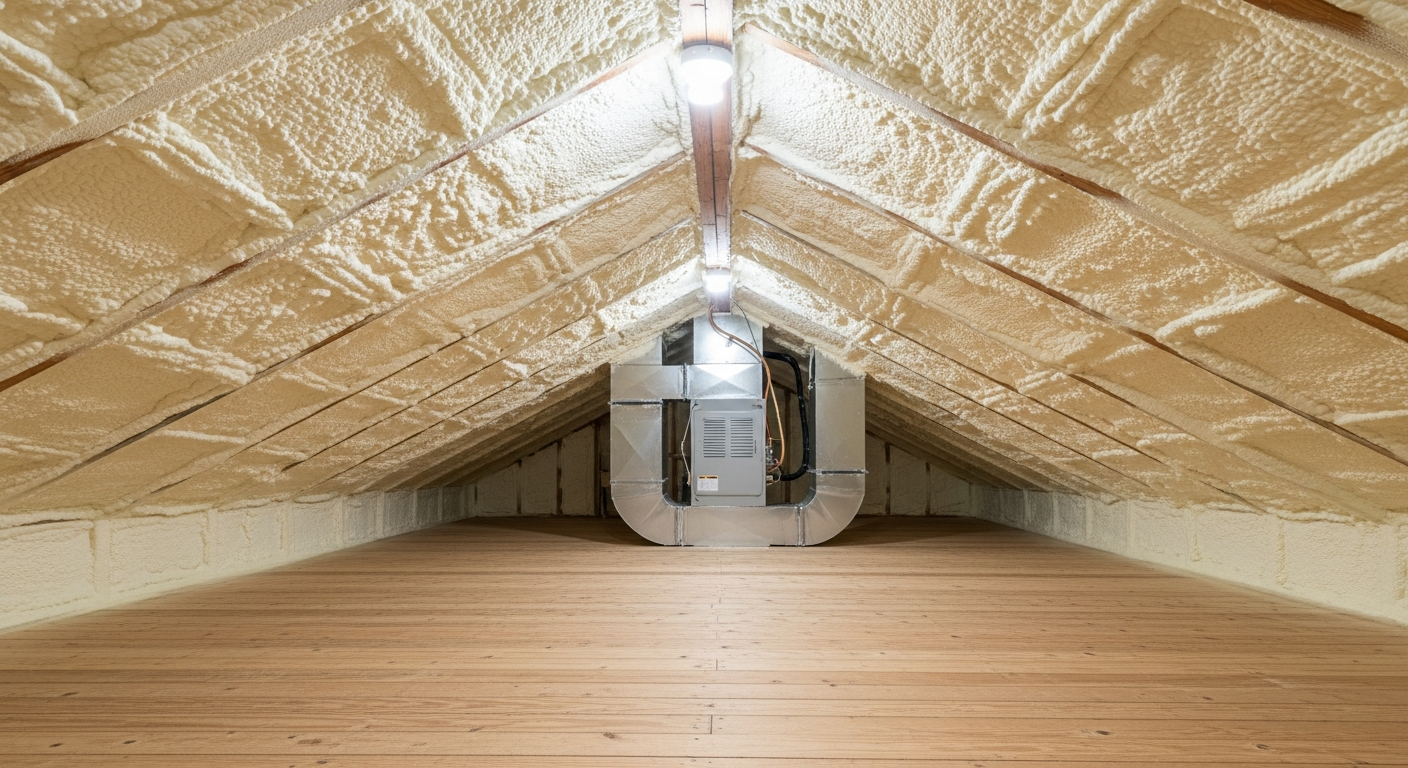
A conditioned attic is one where the insulation is placed at the roofline, on the underside of the roof deck, rather than on the attic floor. This brings the attic into the building's thermal envelope, keeping it much closer to indoor temperature year-round.
Why DFW Attics Are a Problem
In a standard vented attic, summer temperatures routinely exceed 140°F. When HVAC ducts are located in this space, which they are in the vast majority of North Texas homes, the system loses thermal performance before conditioned air ever reaches the rooms.
Even well-sealed ducts experience heat gain from a 140°F attic. The result: your HVAC works harder, rooms stay warmer than the thermostat setpoint, and bills climb.
What a Conditioned Attic Changes
- Attic temperature drops from 140°F to within 10–20°F of indoor temperature
- Duct heat gain drops dramatically
- Delivered air temperature improves
- HVAC runs fewer cycles with less compressor strain
- Upstairs rooms become significantly more comfortable
- Summer utility bills often drop noticeably
- Attic humidity is stabilized
How Spray Foam Creates a Conditioned Attic
Open-cell or closed-cell spray foam is applied to the underside of the roof deck (rafters and sheathing). This moves the insulation boundary from the attic floor to the roofline. The attic space below is now part of the conditioned envelope.
For open-cell, 6–10 inches is the typical DFW recommendation. Closed-cell requires 3–5 inches to achieve similar performance due to its higher R-value per inch.
Humidity Strategy: The Key Detail
A conditioned attic still needs a humidity management strategy. Once the attic is no longer vented, the HVAC system needs to supply air to the attic space and provide a return air path. In some homes, a dehumidifier or ERV may also be appropriate.
Texas Foam Pro reviews the HVAC strategy as part of every conditioned attic project to make sure humidity is managed correctly after encapsulation.
When Conditioned Attics Make the Most Sense
- Homes with HVAC ducts and air handlers in the attic
- Homes with hot upstairs rooms that haven't responded to traditional fixes
- Luxury custom homes with complex rooflines
- Homes with bonus rooms or rooms directly under the roofline
- New construction where the attic is designed as a conditioned space from day one
Related Reading
Is Your DFW Attic Ready for Conditioning?
Texas Foam Pro evaluates your attic, ductwork, and HVAC system to design the right conditioned attic system for your home.