Rim Joist Spray Foam Insulation in Dallas–Fort Worth
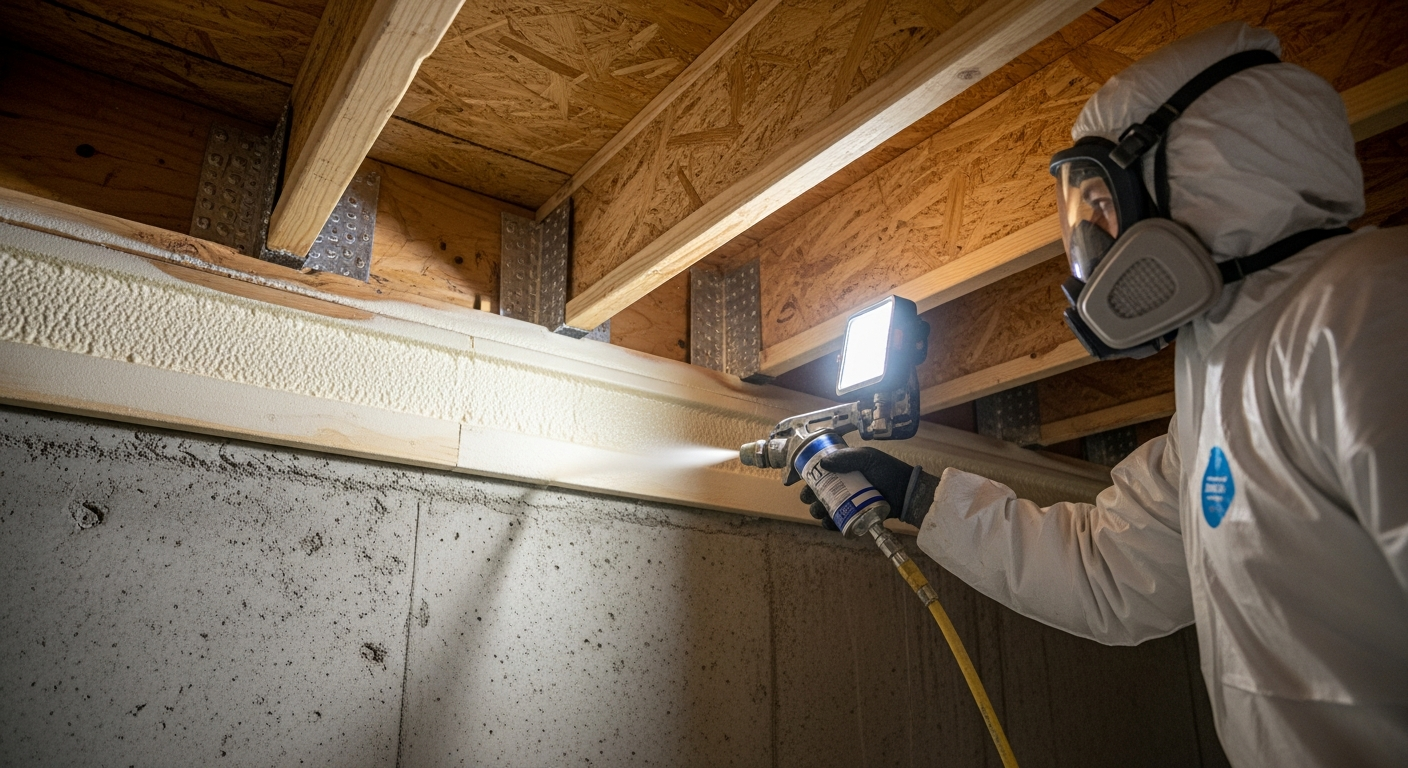
At Texas Foam Pro, rim joist spray foam is one of the most overlooked yet most effective upgrades we install in Dallas–Fort Worth homes.
Most homeowners never see the rim joist, but they absolutely feel its effects.
When the rim and sill plate area is not properly sealed, it becomes one of the largest hidden leakage paths in the house.
Problems at this transition can contribute to cold floors near exterior walls, drafts at baseboards, dust around perimeter rooms, and uneven room temperatures. Musty smells, pest entry, wood movement, and HVAC complaints can have other causes too, so we assess the whole area before recommending a fix.
The rim joist is the framed edge where the floor system meets the exterior foundation wall. It sits at one of the most critical transitions in the building envelope: foundation to framing, subfloor to wall, crawl space to living space, garage ceiling edge to room above.
When this transition leaks, it can contribute to stack-effect air movement, perimeter drafts, and moisture transport.
Texas Foam Pro assesses the accessible rim joist and sill plate transition and designs a seal that connects the foundation, framing, penetrations, and floor edge where the assembly allows. Closed-cell spray foam can provide insulation and an air-control layer in a shallow cavity, but continuity and vapor control depend on the substrate, edge details, product, and surrounding assembly.
Why Rim Joists Matter So Much
The rim joist area is one of the most important building science "critical seals."
Even though it is a relatively small square footage area, it sits exactly where outside air loves to enter:
- sill plate gaps
- anchor bolt penetrations
- band board seams
- floor joist bays
- foundation irregularities
- pipe and wire penetrations
- cantilever edges
- garage floor transitions
Because warm air rises in winter and conditioned air pulls from below in summer, these perimeter edges become major pressure zones. This creates:
Pressure Zone Effects
When the rim joist area is unprotected, these effects are common:
- stack-effect leakage
- perimeter cold spots
- hot edge floors in summer
- crawl humidity migration
- pest entry
- duct leakage pathways
- rim condensation in some assemblies
Sealing this area can improve comfort when the rim and sill are significant leakage paths. The result depends on the rest of the building envelope too.
How Texas Foam Pro Approaches Rim Joists
Every rim joist project starts with understanding what is on the other side of the rim. Before installation, we evaluate:
- 1crawl space vs slab edge
- 2pier-and-beam vs stem wall
- 3room-over-garage transitions
- 4cantilevered floor systems
- 5plumbing and wiring penetrations
- 6sill plate gaps
- 7moisture exposure
- 8termite and pest history
- 9whether closed-cell should continue into crawl walls
- 10whether this is part of a larger crawl encapsulation
A Grapevine pier-and-beam home with humid crawl air requires a different strategy than a Southlake custom home with a cold game-room corner above the garage. That is why we build the foam system around the transition itself. Our preferred best practice is closed-cell spray foam that connects: foundation wall, sill plate, rim board, subfloor edge, joist bay transitions, penetrations through the band board, into one continuous seal.
Our Most Common Rim Joist Applications
Texas Foam Pro seals rim joist transitions across a wide range of DFW home types.
Crawl Space Rim Sealing
This is one of our most common DFW upgrades. In older pier-and-beam homes, humid crawl air can enter through rim gaps, sill plate cracks, joist penetrations, and old utility lines. Sealing these gaps may help perimeter drafts and floor comfort. Crawl humidity and odors also require their underlying sources to be addressed.
Room Over Garage Edge Zones
One of the most overlooked comfort issues. The room may be insulated well, but the floor edge where the garage ceiling meets the exterior wall often leaks badly. We seal: floor band edges, kneewall transitions, cantilever details, garage-to-room corners, steel beam penetrations. This often solves the 'cold edge floor' complaint.
Detached Structures
For detached offices, pool houses, and conditioned garages, rim joists are often the biggest leakage zone. We treat these transitions as part of the full envelope system.
Cantilever Floors
Modern homes with floating rooms and overhangs can have exposed floor edges. A properly detailed closed-cell foam application can provide air sealing and insulation in shallow framing; condensation control depends on the full assembly and its moisture conditions.
When Closed-Cell Fits a Rim Joist
Closed-cell spray foam can be a useful option in shallow rim cavities when the substrate is sound and the assembly can safely accommodate it. Depending on the product and installation, it can provide:
- high R-value per inch
- shallow cavity performance
- adhesion to suitable prepared substrates
- vapor resistance at a suitable installed thickness
- a way to connect accessible rim, sill, and floor-edge air-control details
Rim joists sit at a moisture-sensitive transition between wood framing and masonry. Any foam detail needs dry, suitable substrates, appropriate fire protection, and a plan that preserves required termite inspection visibility and drainage. No foam application replaces fixing an active leak.
Best Practices That Matter
Texas Foam Pro follows strict rim-joist best practices. These include:
- wood moisture checks
- no spraying over active leaks
- sill plate seam sealing
- anchor bolt detailing
- joist bay edge continuity
- pipe and wire penetration sealing
- termite inspection gap planning where required
- continuation into crawl wall systems
- flush finish when exposed
- cantilever edge continuity
One of the most important best practices in Texas is preserving required termite inspection visibility zones where local code or pest professionals require it. We design around that while still maximizing air sealing performance.
Common Problems We Solve
Texas Foam Pro commonly solves:
- perimeter drafts
- cold floors near walls
- musty smells
- crawl humidity entering rooms
- bugs entering at band boards
- cold corners
- room-over-garage floor edges
- detached office discomfort
- cantilever cold spots
- hardwood floor movement
Who This Page Is Perfect For
This service is ideal for:
- pier-and-beam homes
- crawl-space homes
- room-over-garage complaints
- detached conditioned spaces
- luxury remodels
- cold-floor complaints
- cantilevered architectural homes
- detached offices
- pool houses
- perimeter comfort upgrades
Service Areas
Texas Foam Pro proudly provides rim joist spray foam throughout: Dallas, Fort Worth, Southlake, Grapevine, Colleyville, Keller, Westlake, Frisco, Plano, Prosper, Celina, McKinney, Denton, Arlington, Mansfield, Weatherford, Aledo and surrounding DFW communities.
Frequently Asked Questions
Related Reading
Ready to Get Started?